BrikBeam Blog & Construction Standards
Practical guides on construction project delivery, cost accounting, handover protocols, and subcontractor management. Built by practitioners for managers and business owners.
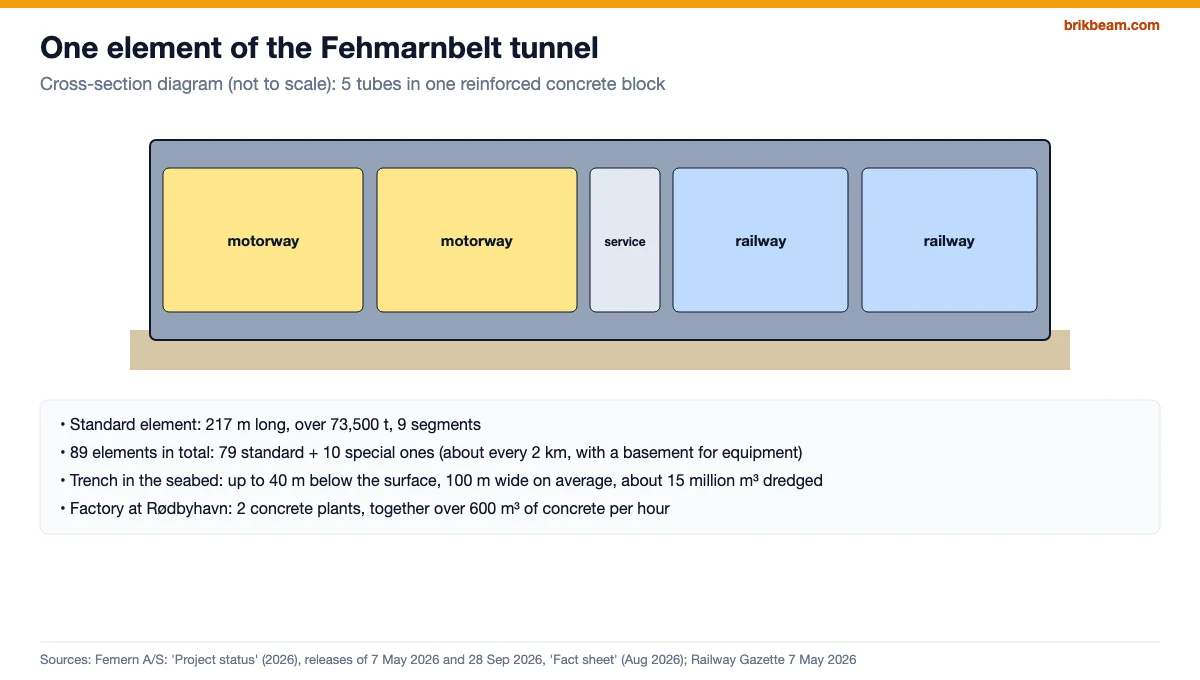
The Fehmarnbelt tunnel by the numbers: how to sink 73,500 tonnes of concrete under the Baltic
A tunnel element weighs over 73,500 t and still floats. How Denmark is casting and sinking an 18 km tunnel between Denmark and Germany, what it costs, how much time it will save and why cars will not use it before 2032 at the earliest.
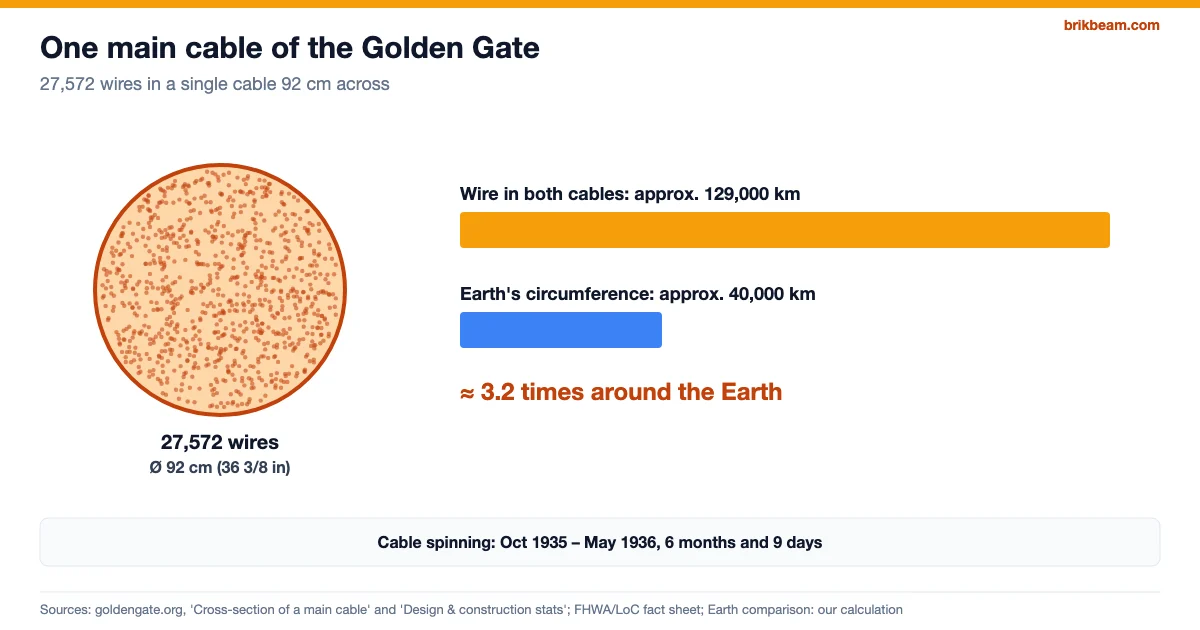
The Golden Gate by the numbers: a safety net, a cable of 27,572 wires and a colour that was never in the plan
While the Golden Gate was being built, a net strung under the deck saved 19 men. The bridge in numbers: a span record that stood for 27 years, a cable of 27,572 wires, USD 35 million of bonds in the Depression, a colour taken from the primer and painting that never really ends.
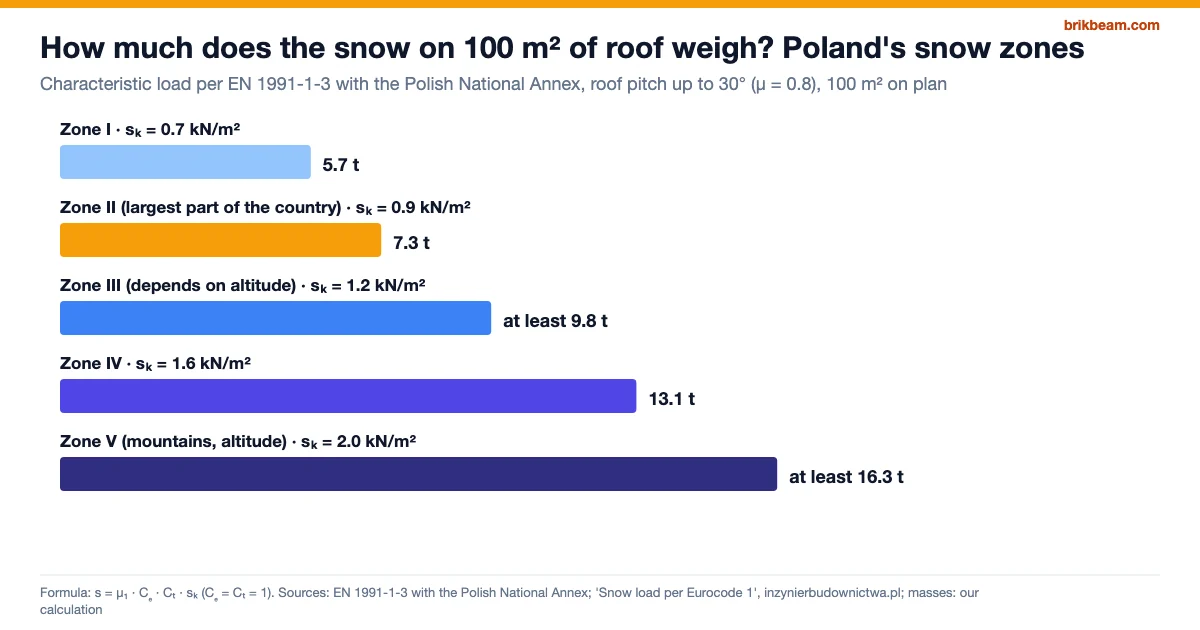
How much does the snow on a roof weigh? Snow zones, roof pitch and a worked Eurocode example
7.3 tonnes per 100 m²: that is what Eurocode assumes for snow on an ordinary roof in central Poland. Where the number comes from, how the zone and the pitch change it, why 18 cm of wet snow weighs as much as 72 cm of powder, and what the law asks of owners.
Megaprojects: all BrikBeam episodes and articles, with the numbers
The Øresund Bridge, the Golden Gate, Tacoma, the Świna and Fehmarnbelt tunnels, the Vistula Spit canal, the Panama Canal, the Three Gorges Dam and snow on a roof. Every episode in the series, with articles and calculators.
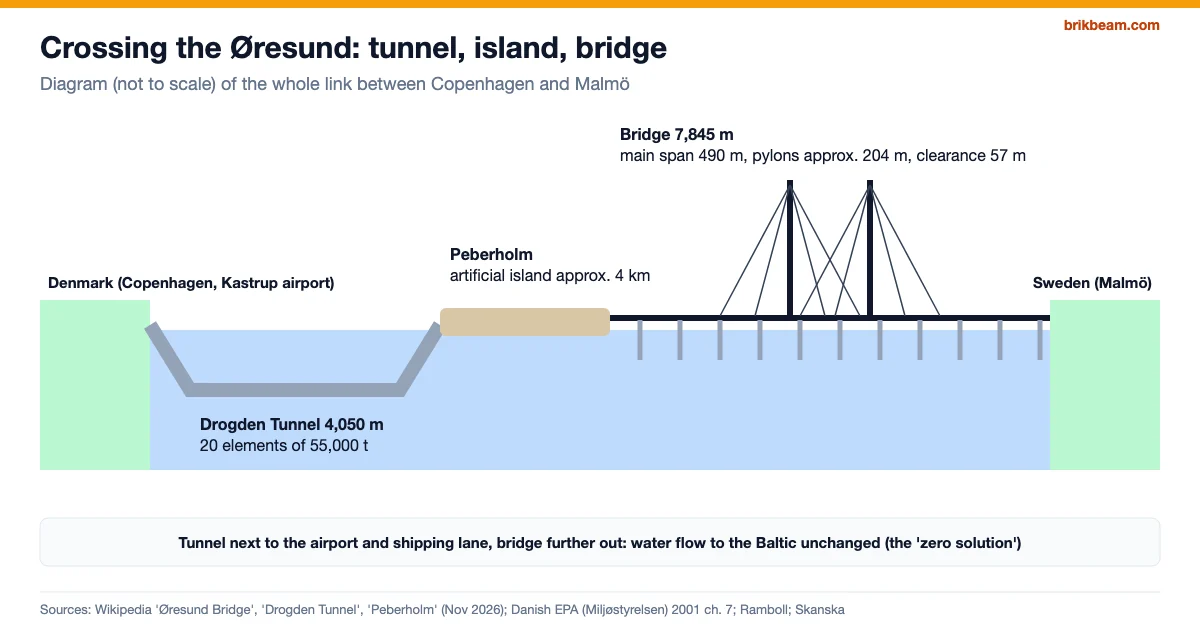
The Øresund link by the numbers: a tunnel, an artificial island and a bridge the Baltic was never supposed to notice
The Øresund crossing starts as a tunnel, runs across an artificial island and ends as a bridge. Why it was built that way, what it cost, how the tunnel elements and the precast bridge were made, and why the Baltic was not supposed to 'notice' the project.
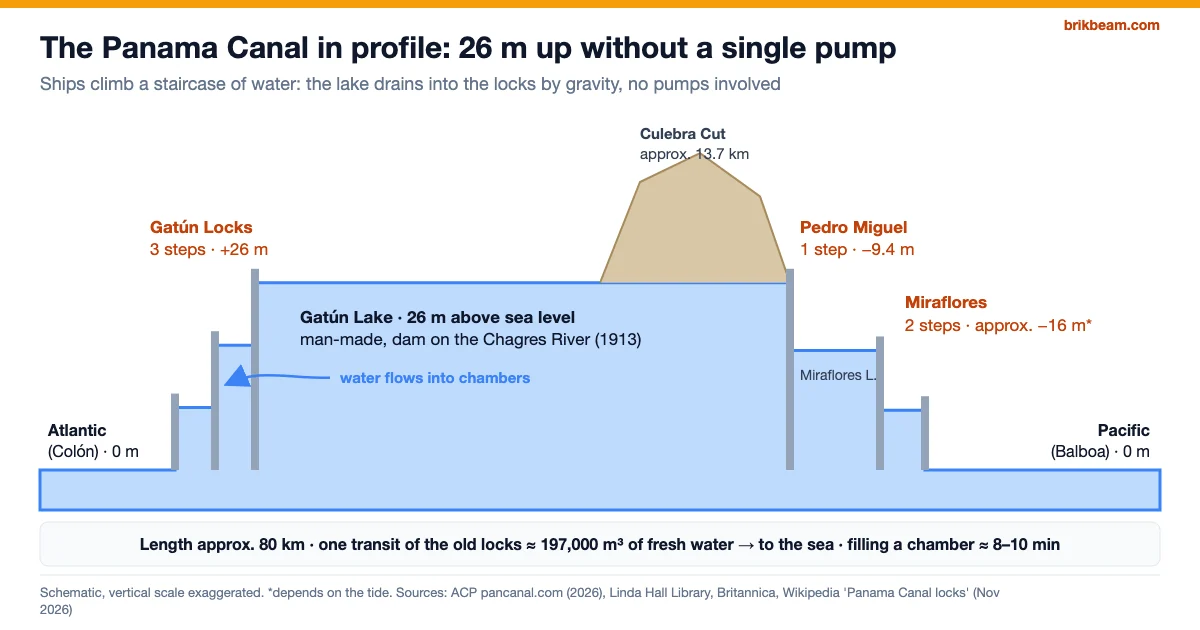
The Panama Canal by the numbers: how the locks work, where the water comes from and how much concrete it took
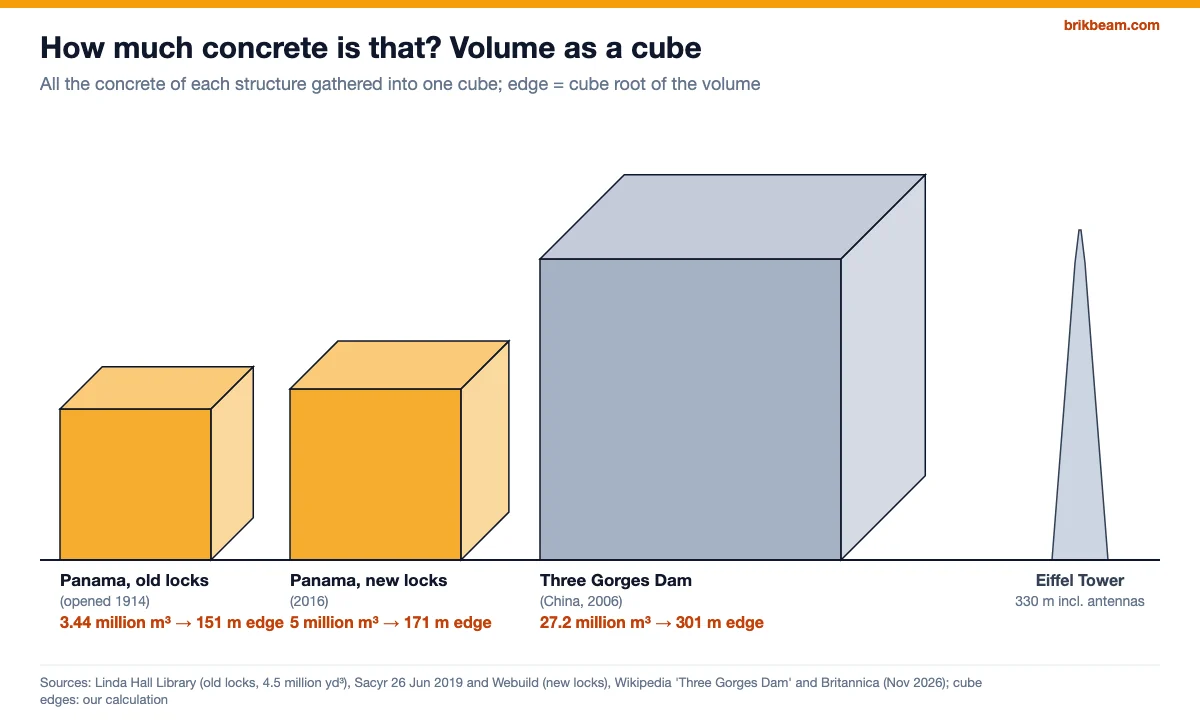
Locks with no pumps, 197,000 m³ of fresh water per ship, 3.44 million m³ of concrete in the 1914 locks and a drought that forced the first traffic limits in the canal's history. The Panama Canal, worked out step by step.
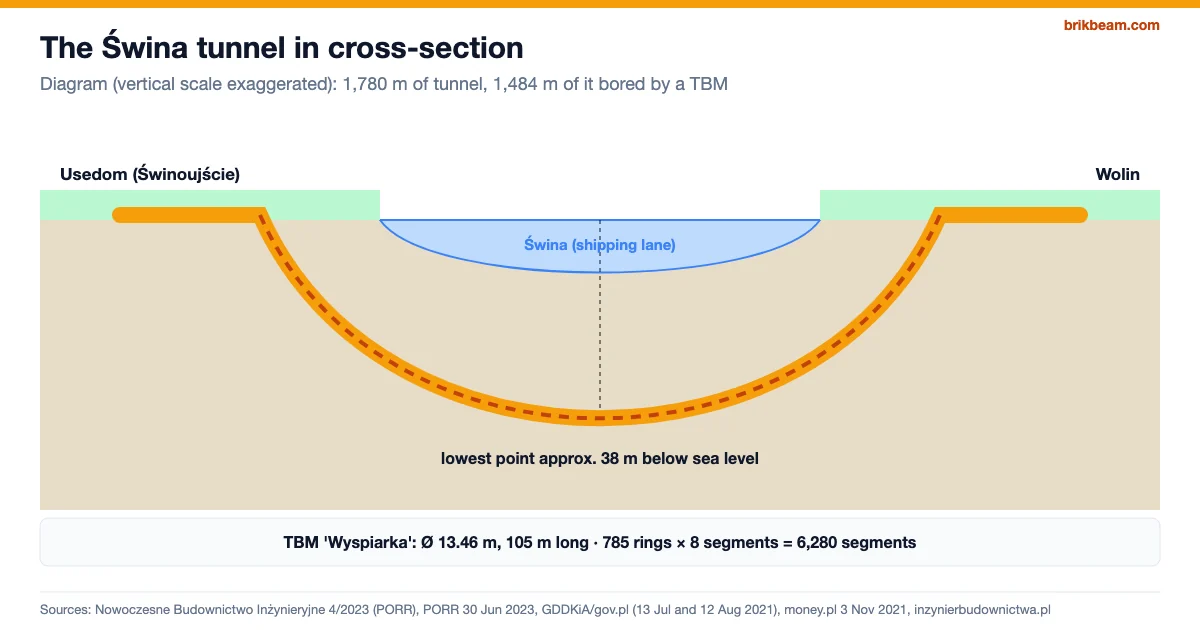
The Świna tunnel by the numbers: a TBM, 6,280 segments and ground freezing
The first fixed link between the islands of Usedom and Wolin: the TBM 'Wyspiarka' bored about 8 m a day, and an escape passage was dug in frozen ground. Numbers, a timeline, the cost per metre and a comparison with Fehmarnbelt.
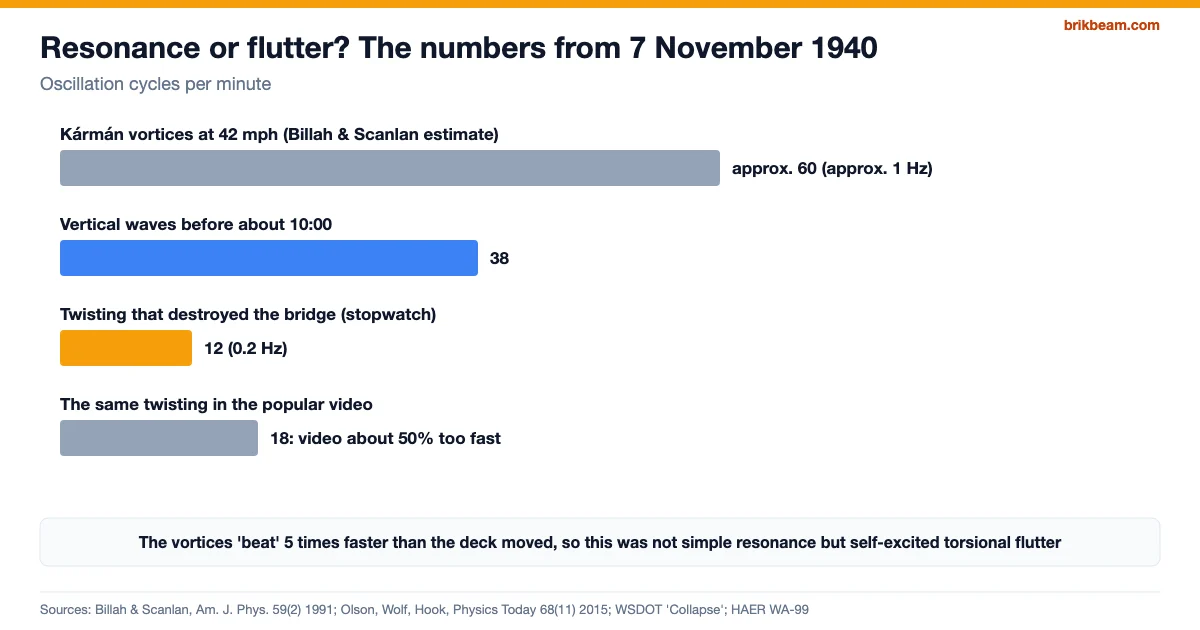
Tacoma Narrows 1940 by the numbers: why the bridge fell in a wind under 70 km/h, and why it was not simple resonance
On 7 November 1940 the Tacoma Narrows Bridge twisted itself apart in a wind of about 65–70 km/h. The numbers: deck slenderness, wind pressure, oscillation frequencies, why the famous film is sped up and how flutter differs from resonance.
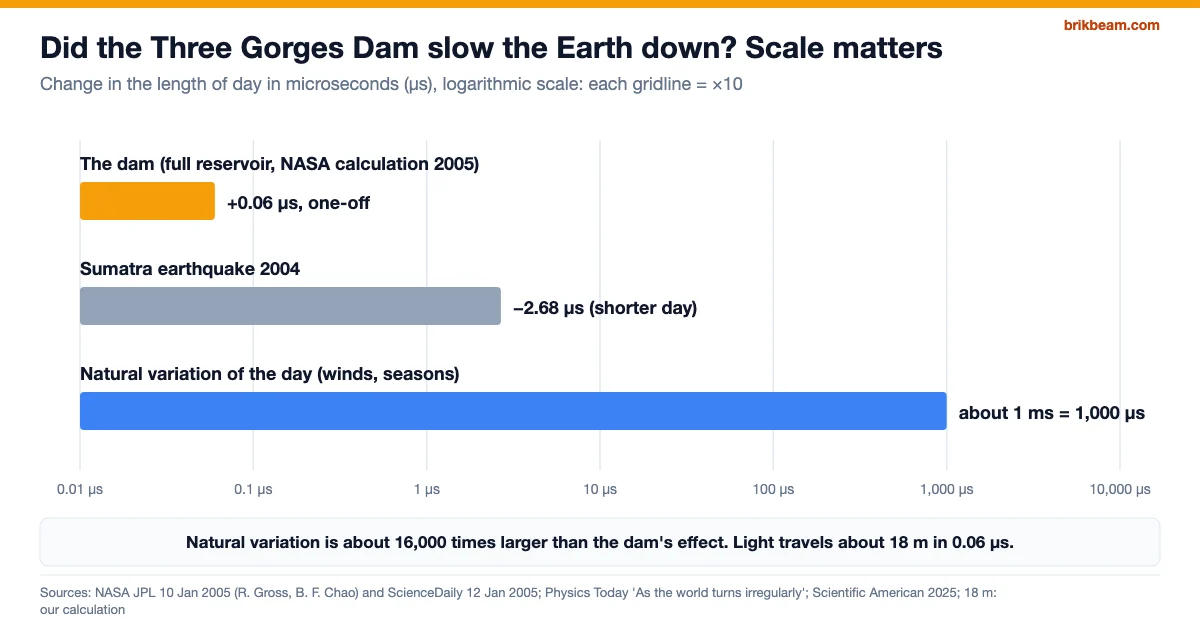
Did the Three Gorges Dam really slow down the Earth? The numbers, the concrete and the power
NASA calculated that a full reservoir makes the day 0.06 µs longer. It sounds dramatic until you compare it with the natural wobble of the day. Plus the dam in cross-section, its concrete as a 301 m cube, the power output and ships riding a lift up 113 m.